
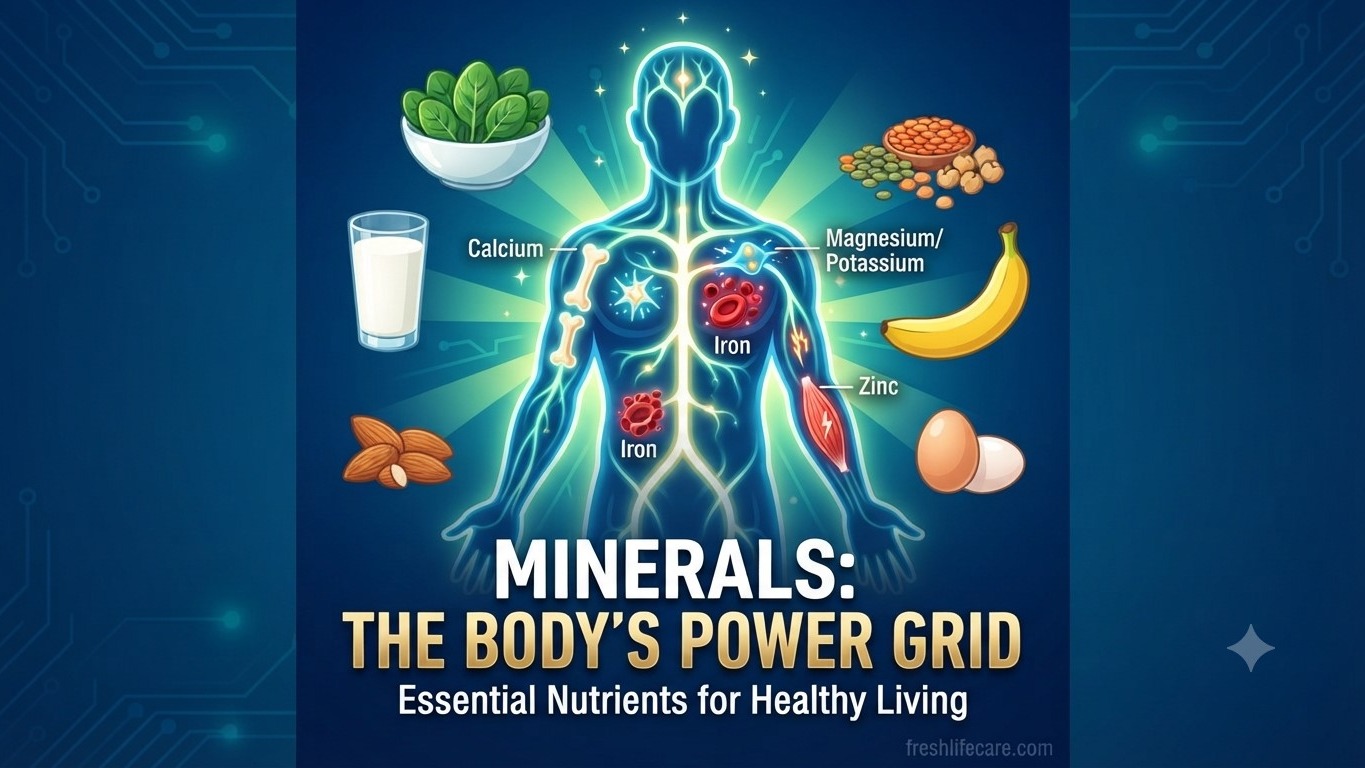
Minerals: you can't see them, but without them, your body's whole power grid goes dark.
Have you ever wondered why our bodies need minerals to stay healthy and strong? Minerals are essential nutrients that help our bodies perform many important functions, from building strong bones and teeth to maintaining healthy blood, supporting nerve function, and regulating our heartbeat. Although our bodies need minerals in relatively small amounts, they are vital for good health. The good news is that we can get most of these nutrients from everyday foods such as green leafy vegetables, fruits, milk, pulses, nuts, seeds, eggs, and fish. In this article, we will explore why minerals are important, which minerals our bodies need, and how we can obtain them through a balanced diet.
Why You Need Minerals
Building Strong Bones and Teeth: Calcium, phosphorus, and magnesium are the key structural components of your skeleton and teeth.
Maintaining Heartbeat and Muscle Function: Minerals like calcium, potassium, and magnesium help your muscles contract and relax, and keep your heart beating normally.
Carrying Oxygen: Iron is essential for making hemoglobin, the part of red blood cells that transports oxygen throughout your body.
Nerve Signaling: Sodium, potassium, and calcium are vital for transmitting nerve impulses.
Supporting Immunity and Healing: Zinc and selenium play important roles in your immune system and wound healing.
Regulating Body Fluids: Sodium and potassium act as electrolytes to maintain the balance of fluids in your body.
Which Minerals Do We Need and How Can We Get Them?
Calcium
Why we need it: Strong bones and teeth, muscle movement, and nerve function.
Sources: Milk, curd, paneer, calcium-set tofu, ragi, and some leafy greens.
Iron
Why we need it: Helps red blood cells carry oxygen.
Sources: Lentils, beans, chickpeas, leafy greens, meat, and iron-fortified foods. Eating vitamin C-rich foods such as lemon or guava with plant sources helps iron absorption.
Potassium
Why we need it: Supports muscle function, nerve signals, and healthy blood pressure.
Sources: Bananas, potatoes, beans, tomatoes, spinach, and other vegetables and fruits.
Magnesium
Why we need it: Supports muscles, nerves, bones, and energy-producing processes.
Sources: Nuts, seeds, whole grains, beans, and green leafy vegetables.
Zinc
Why we need it: Supports immunity, wound healing, and normal growth.
Sources: Beans, chickpeas, dairy products, nuts, seeds, eggs, seafood, and meat.
Iodine
Why we need it: Helps the thyroid gland produce hormones.
Sources: Iodized salt, fish, seafood, dairy products, and eggs. Use salt in moderation.
Simple Ways to Get Enough Minerals Every Day
You do not need expensive foods or supplements to obtain minerals. Small changes to your daily diet can make a difference.
Eat a variety of fruits and vegetables, including green leafy vegetables.
Include dal, beans, chickpeas, and other pulses in regular meals.
Choose milk, curd, or suitable calcium-fortified alternatives.
Add nuts and seeds in appropriate portions.
Eat whole grains such as oats, whole-wheat roti, and millets.
Include eggs, fish, or other suitable protein sources if they are part of your diet.
Use iodized salt in moderation instead of relying on specialty salts that may not contain iodine.
What Happens When We Do Not Get Enough Minerals?
A mineral deficiency can affect different parts of the body. For example:
Iron deficiency: May cause tiredness, weakness, and anaemia.
Calcium deficiency: Can contribute to poor bone health over time.
Iodine deficiency: Can affect thyroid function and normal development.
Zinc deficiency: May affect wound healing and immune function.
Magnesium deficiency: Can cause symptoms such as weakness or muscle cramps in some cases.
Conclusion
Minerals may be needed in small quantities, but their role in our health is enormous. They help build strong bones, support healthy blood, maintain nerve and muscle function, and keep many body processes working properly. By eating a varied, balanced diet rich in vegetables, fruits, pulses, dairy products, nuts, seeds, and other nutritious foods, we can help our bodies get the minerals they need.
Related Articles
Power your body with protein—build strength, boost health, and make every day stronger!
Discover why protein is essential for muscle repair, immunity, and strength. Learn the best food sources, daily intake guidelines, and how to fuel your body naturally.
Read More
Multivitamins: Necessary or a Waste of Money?
Discover whether multivitamins are truly essential or an avoidable expense. Learn the benefits, risks, and how to choose the right path for your health.
Read More
Winter Is Coming-Prepare Today to Protect Your Health Tomorrow
Prepare for cold weather before winter arrives! Discover 10 essential precautions, from warm clothing and hydration to immunity-boosting nutrition and skincare.
Read More