
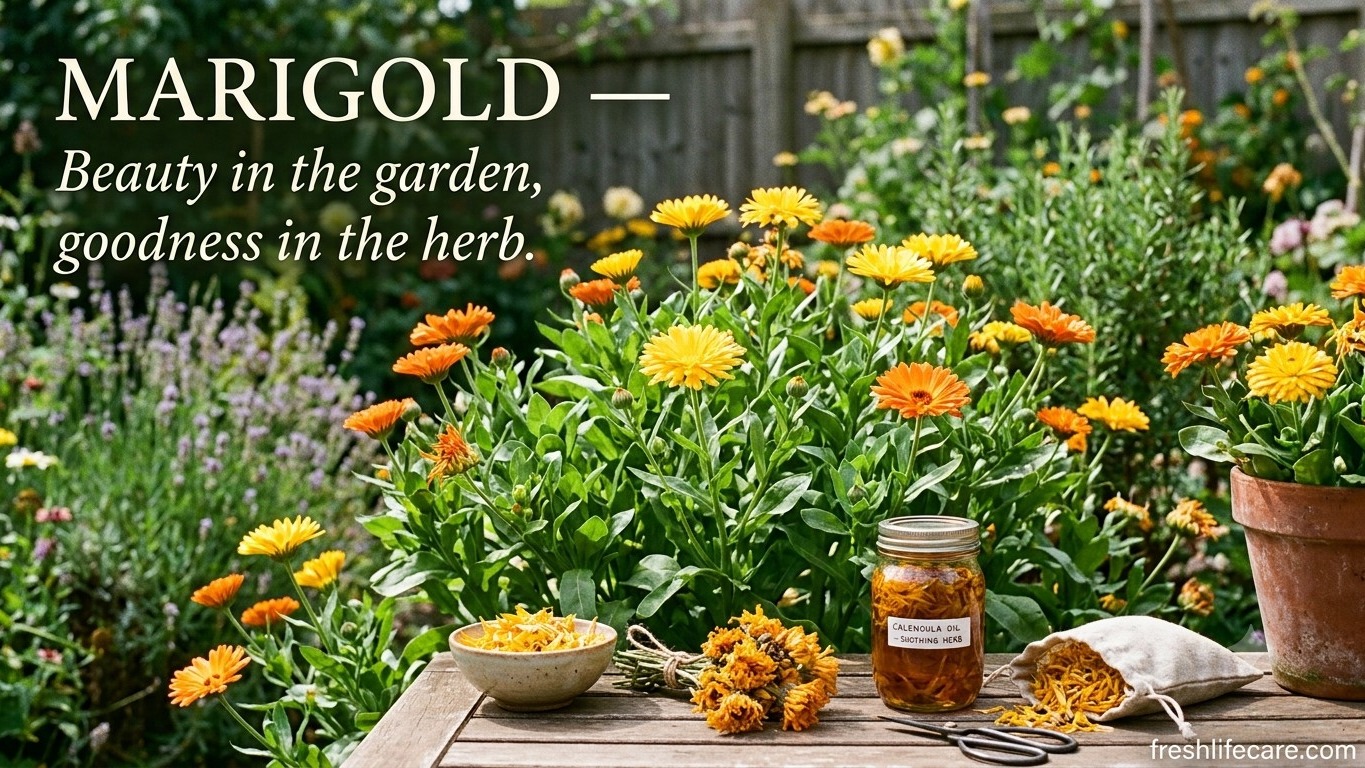
Marigold - beauty in the garden, goodness in the herb.
Marigold is a bright, cheerful flowering herb admired for its golden-yellow and orange petals. Commonly known as Calendula officinalis when used medicinally and in cooking, it has been valued for centuries for its gentle flavour, natural colouring properties, and traditional skin-soothing uses. Its petals can be added to teas, salads, soups, rice dishes, oils, creams, and herbal preparations, making marigold both a beautiful garden flower and a useful natural herb.
Growing conditions
Calendula grows best in:
Cool to mild climates
Full sun light afternoon shade can help in very hot regions
Well drained, moderately fertile soil
Gardens, farms, home plots, and pots or containers
It can tolerate several soil types, including sandy and clay soils, but waterlogging should be avoided. In temperate climates, it is usually sown in spring; in warmer areas with mild winters, it may be grown from autumn through spring.
In India
In India, marigold is grown widely as an ornamental and commercial flower crop. For herbal use, ensure the plant is specifically "Calendula officinalis" rather than the more common garden tagets marigold. Calendula is generally better suited to cooler seasons and can be grown in sunny gardens or containers with well-drained soil.
Uses as an herb
A single yellow Calendula officinalis flower covered in small water droplets.
Culinary herb: Fresh or dried calendula petals can be sprinkled over salads, soups, rice, eggs, and baked dishes. Their golden-orange colour has earned calendula the nickname “poor man’s saffron.” The taste is mild, slightly earthy, and faintly peppery.
Herbal tea: The dried petals may be steeped in hot water for a light floral infusion.
Topical preparations: Calendula is commonly infused into oils, creams, and salves for minor skin irritation and wound care. Evidence suggests possible benefit for some forms of skin inflammation, but it is not a replacement for medical care of infected, deep, or serious wounds.
Natural colour: Petals provide a yellow-orange colour to foods and traditional preparations.
Medicinal benefits of marigold (Calendula officinalis)
Helps soothe minor skin irritation, such as dryness, chafing, and mild redness.
May support healing of small cuts, scrapes, and superficial wounds when used as a cream, ointment, or salve.
Has anti-inflammatory properties that may help calm mild skin inflammation.
May be useful for minor burns and sun-exposed irritated skin, but not for serious burns.
Traditionally used for rashes and diaper rash; limited clinical evidence suggests calendula ointment may be helpful for mild cases.
May help reduce discomfort from some forms of dermatitis, including skin irritation related to radiotherapy, although research findings are mixed.onlinelibrary.wiley+1
Traditionally used as a gargle or mouth rinse for minor mouth and gum irritation, but it does not treat dental infections.
Contains plant compounds with antioxidant, anti-inflammatory, and antimicrobial activity in laboratory studies; these findings do not prove that it treats infections in people.
Use for skin-related issues: For mild dryness, chafing, minor redness, small cuts, scrapes, or mild sunburn, wash the area gently, pat it dry, and apply a thin layer of calendula (Calendula officinalis) cream or ointment 1–3 times a day according to the product label. Patch-test it first, avoid the eyes and open/deep wounds, and stop use if itching, burning, swelling, or increased redness occurs. Seek medical advice for pus, spreading redness, severe pain, fever, deep wounds, bites, or serious burns.
Simple herbal use
For a gentle calendula tea, steep 1–2 teaspoons of dried, food-grade Calendula officinalis petals in one cup of hot water for 5–10 minutes, then strain. For cooking, use the petals as a garnish or mix them into rice for colour.
Safety
Confirm the botanical name: choose Calendula officinalis for herbal and culinary use. “Marigold” can also mean Tagetes, whose sap may irritate skin and whose flowers should not be eaten in large amounts.
Avoid internal calendula use during pregnancy or breastfeeding unless a qualified healthcare professional says it is appropriate.
People allergic to the daisy/Asteraceae family—such as ragweed, daisies, or chrysanthemums—may experience an allergic reaction.
Use culinary quantities or commercially prepared products; consult a clinician before taking supplements or concentrated extracts.
Conclusion
Calendula marigold is a colourful, useful herb for adding a mild flavour and golden appearance to food, making tea, and supporting gentle topical skin care. Its safest role is as a properly identified culinary flower or external preparation, used thoughtfully rather than as a self-treatment for serious illness.
Related Articles

Power your body with protein—build strength, boost health, and make every day stronger!
Discover why protein is essential for muscle repair, immunity, and strength. Learn the best food sources, daily intake guidelines, and how to fuel your body naturally.
Read More
Multivitamins: Necessary or a Waste of Money?
Discover whether multivitamins are truly essential or an avoidable expense. Learn the benefits, risks, and how to choose the right path for your health.
Read More
Minerals: you can't see them, but without them, your body's whole power grid goes dark.
Discover why your body needs essential minerals like calcium, iron, and magnesium. Learn top food sources and simple tips to meet your daily intake naturally.
Read More