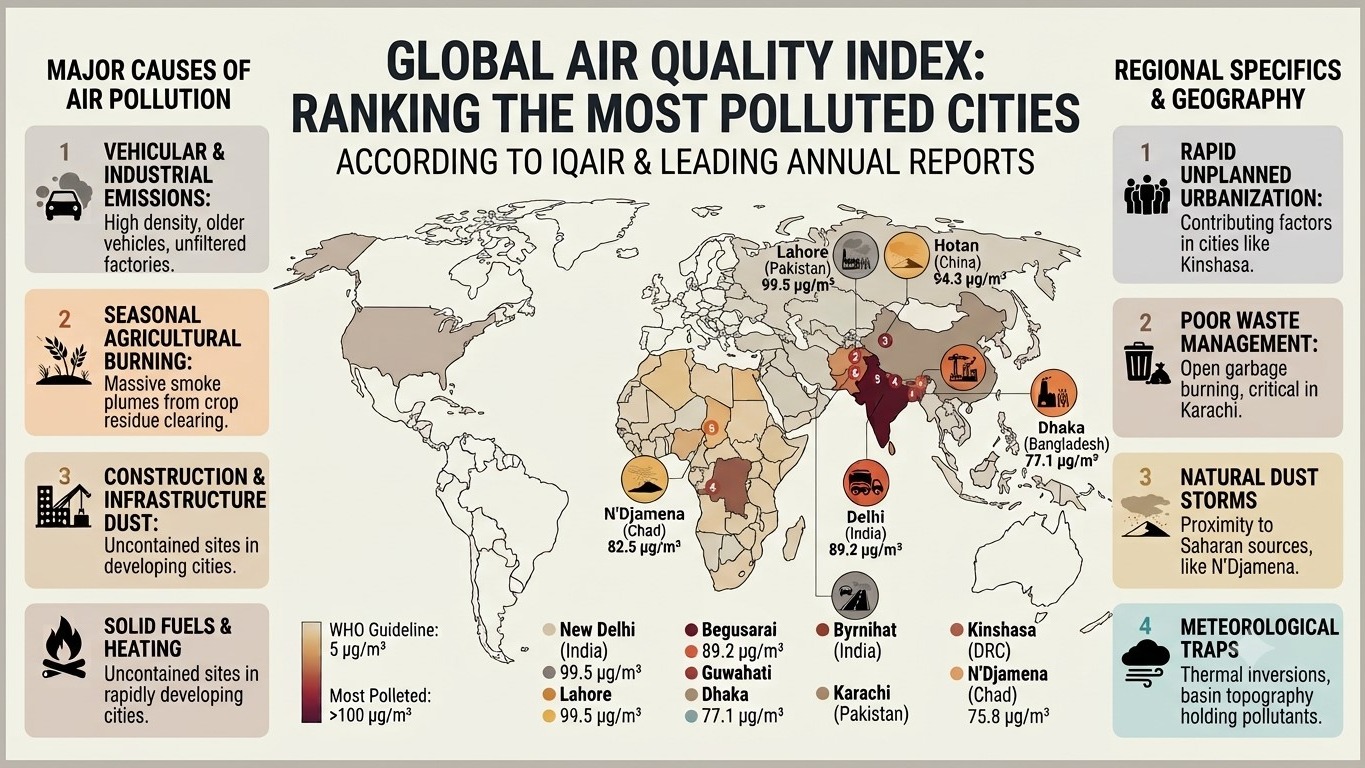
Global Air Quality Index: Ranking the Most Polluted Cities
Air pollution harms people's lives in various ways. Firstly, it exacerbates respiratory conditions such as asthma, bronchitis, and chronic lung diseases. Secondly, it increases the risk of heart disease and stroke. In children, it hinders cognitive and physical development. Above all, breathing polluted air becomes difficult, significantly reducing the quality of life.
Based on annual reports from global air quality monitoring organizations like IQAir.
Here are some of the most polluted cities in the world:
New Delhi (India): Regularly ranked among the world's most polluted capital cities. Major contributors include vehicular emissions, industrial waste, construction dust, and seasonal crop residue burning in neighboring states.
Lahore (Pakistan): Frequently experiences severe toxic smog, particularly during the winter months, due to industrial pollution, low-quality fuel usage, and agricultural burning.
Dhaka (Bangladesh): Continuously ranks high on global air pollution indices, largely driven by unplanned construction work, emissions from brick kilns, heavy traffic, and road dust.
Byrnihat (India): Located on the border of Assam and Meghalaya, this industrial hub has recorded extremely high annual average levels of fine particulate matter PM2.5.
Kinshasa (Democratic Republic of the Congo): Suffers from severe environmental and air pollution due to rapid unplanned urbanization, poor waste management, and heavy reliance on biomass (wood fuel) for cooking.
Karachi (Pakistan): Dense traffic, uncontrolled industrial emissions, and open garbage burning contribute significantly to the poor air quality in this coastal megacity.
N'Djamena (Chad): Dust storms from the Sahara, combined with localized emissions and unpaved roads, make it one of the most polluted cities in Central Africa.
Major Causes of Global Air Pollution:
Uncontrolled Industrial & Vehicle Emissions: Older vehicles and unfiltered factories release high concentrations of fine particulate matter PM2.5 and PM10
Seasonal Agricultural Burning: Clearing fields by burning crop residue releases massive plumes of smoke over surrounding metropolitan areas.
Construction & Infrastructure Dust: Uncontained construction sites in rapidly developing cities significantly raise airborne dust levels.
Note: Air Quality Index (AQI) rankings change continuously. Year-over-year rankings shift depending on long-term weather patterns, policy interventions, industrial shifts, and economic activity.
Related Articles

The Truth about Breast Enhancement: Separating Marketing Myths from Medical Realities
Planning breast augmentation? Separate marketing promises from medical reality. Learn the truth about exercises, creams, implants, and surgical safety.
Read More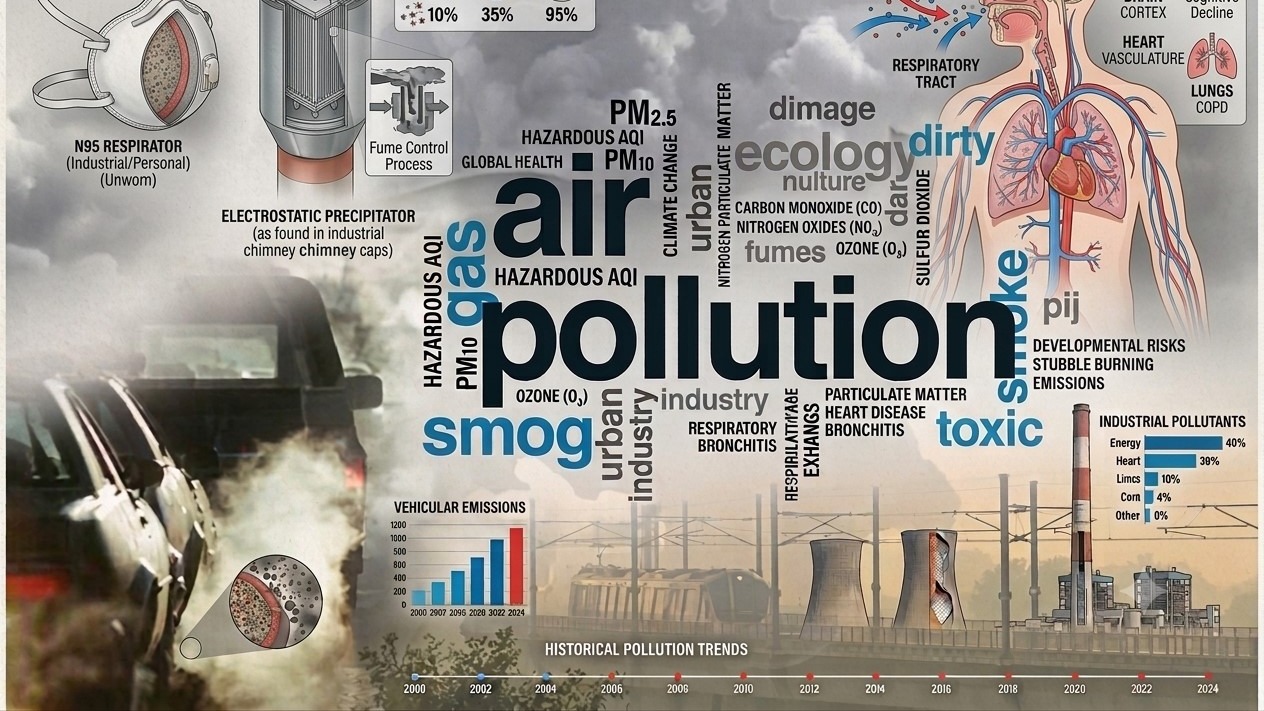
How Air Pollution Systematically Damages Human Health and Daily Life
How does poor air quality affect your body and daily routine? Explore the systematic health risks of long-term air pollution exposure and how to stay safe.
Read More
How to Keep Your Skin Fresh and Radiant All Day. 7 Daily Habits for All-Day Glow
Learn how to keep your skin fresh and glowing from morning to night. Follow these 7 easy daily habits for healthy, radiant skin. Read more!
Read More