
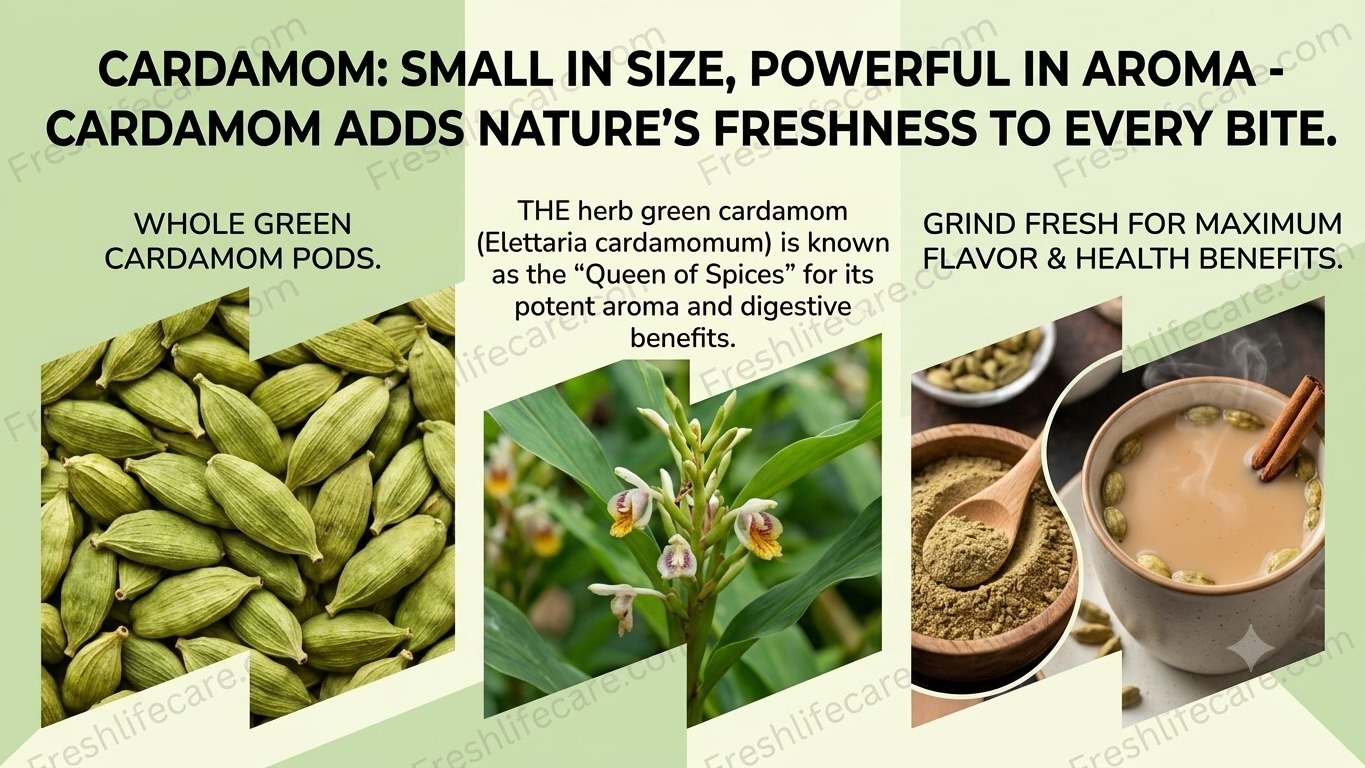
Cardamom “Small in size, powerful in aroma - cardamom adds nature’s freshness to every bite.”
Cardamom is technically a spice, not a herb. Spices come from seeds, fruits, bark, or roots, and cardamom is the seed pod of plants in the ginger family (genus Elettaria for green cardamom, Amomum for black). Herbs are the leafy parts of plants. That said, in traditional medicine systems like Ayurveda and Unani, cardamom is widely used as a medicinal herb, which is probably where the "herb" framing comes from. Cardamom, commonly known as Elaichi.
Varieties of Cardamom
Cardamom comes in different varieties, but the two most widely known types are green cardamom and black cardamom. Although both belong to the ginger family, they differ in appearance, aroma, taste, cultivation, and culinary use.
Green Cardamom, scientifically known as Elettaria cardamomum, is also called small cardamom or Chhoti Elaichi. It has small green pods filled with tiny aromatic seeds. Its flavor is sweet, fresh, and slightly floral, making it popular in tea, coffee, sweets, desserts, pulao, and various spice blends. In India, it is mainly cultivated in the hilly regions of Kerala, Karnataka, and Tamil Nadu.
Black Cardamom, scientifically known as Amomum subulatum, is known as large cardamom or Badi Elaichi. It produces larger, dark-colored pods with a strong smoky and earthy aroma. The pods are often dried using traditional methods that give them their characteristic smoky flavor. Black cardamom is widely used in biryani, curries, meat dishes, pulao, and other savory preparations. In India, it is particularly associated with Sikkim, the Darjeeling and Kalimpong hills, and parts of the Northeast.
While green cardamom is valued for its sweet and refreshing fragrance, black cardamom is appreciated for its deep, smoky character. Together, these varieties demonstrate the remarkable diversity and culinary importance of cardamom.
Traditional Uses
Cardamom has traditionally been used to:
Support digestion and reduce occasional bloating
Freshen breath
Add flavor and aroma to tea, coffee, sweets, and savory dishes
Provide antioxidant compounds
Areas Famous for Cardamom Cultivation(green)
Cardamom is one of the most popular and aromatic spices grown in tropical and hilly regions. In India, Kerala is particularly famous for cardamom cultivation, with Idukki district being one of the country's major cardamom-growing areas. The cool, humid climate, fertile soil, and shaded mountain slopes of the Western Ghats provide favorable conditions for growing high-quality cardamom.
Apart from Kerala, cardamom is also cultivated in parts of Karnataka and Tamil Nadu, especially in the hill regions of the Western Ghats. These areas are known for their suitable climate and natural environment, which help cardamom plants thrive.
Globally, Guatemala is also well known for large-scale cardamom production. Indian cardamom, however, has a long-standing reputation for its distinctive fragrance, flavor, and traditional importance.
In short, when we talk about cardamom in India, Idukki, Kerala, stands out as one of the most recognized cardamom-growing regions.
Health Benefits
Supports digestion: Traditionally used after meals to help with indigestion, gas, and bloating.
Freshens breath: Chewing cardamom seeds has traditionally been used to improve mouth freshness.
May have antioxidant properties: Cardamom contains plant compounds with antioxidant activity.
Traditional respiratory use: In some traditional practices, cardamom has been used in preparations for coughs and respiratory discomfort.
May support oral health: Its aromatic compounds have been traditionally associated with maintaining mouth freshness and cleanliness.
Traditional relaxation use: Cardamom tea is sometimes consumed as a soothing, warming beverage.
Possible Side Effects
Cardamom is generally well tolerated in normal food amounts, but consuming large quantities or concentrated supplements may cause problems in some people.
Stomach discomfort: Some people may experience nausea, diarrhea, or abdominal discomfort.
Allergic reaction: Rarely, people can be sensitive or allergic to cardamom.
Gallbladder concerns: Large medicinal amounts may potentially aggravate gallbladder problems in people with gallstones.
Pregnancy and breastfeeding: Culinary amounts are generally different from concentrated medicinal doses; safety of high-dose supplements is less established.
Areas Famous for Cardamom Cultivation(black)
Black cardamom is sometimes called “black gold” because it is a valuable spice with strong demand and significant economic importance for farmers and traders. In particular, large black cardamom (Amomum subulatum) is associated with Himalayan regions such as Sikkim, West Bengal’s Kalimpong/Darjeeling hills, and parts of Nepal and Bhutan.
Why is it called “Black Gold”?
Black cardamom is sometimes called “Black Gold” because of its economic value and importance as a commercial spice, particularly in Himalayan farming communities. Its distinctive flavor makes it popular in biryani, meat dishes, curries, soups, and spice blends.
Traditional Uses and Possible Health Benefits of Black Cardamom
Black cardamom (Amomum subulatum), also known as Badi Elaichi, has been used traditionally in Indian and Himalayan food and herbal practices. Its strong smoky aroma and warming flavor make it an important culinary spice.
Traditional uses
Digestive support: Traditionally used after meals for indigestion, gas, and bloating.
Respiratory comfort: Traditionally included in preparations for cough and throat discomfort.
Oral freshness: Chewing the seeds has traditionally been used to freshen the breath.
Flavoring: Commonly used in curries, biryani, pulao, soups, and meat dishes.
Warming spice: Traditionally valued in colder climates as part of warming foods and beverages.
Possible health benefits
Black cardamom contains aromatic plant compounds with antioxidant and antimicrobial activity in laboratory research. Some early studies also suggest possible effects related to digestion and cardiovascular health, but strong human evidence is still limited. Therefore, these potential benefits should not be considered proven treatments.
Safety
Black cardamom is generally safe when consumed in normal culinary amounts. Large amounts or concentrated supplements may cause stomach discomfort in some people. People with gallstones, allergies to cardamom, or those taking regular medicines should consult a healthcare professional before using medicinal amounts.
Conclusion:
Green and black cardamom come from the same ginger family but play very different roles. Green cardamom (Elettaria) is sweet, floral, and citrusy, which makes it the natural choice for chai, desserts, and baked goods. Black cardamom (Amomum) is smoky, earthy, and camphor-like, so it suits slow-cooked curries, biryani, and rich meat dishes.
Both aid digestion and freshen the breath in traditional use, and both are safe in normal culinary amounts. The difference lies in the kitchen: green for sweetness and aroma, black for depth and smoke.
In short: green brings the perfume, black brings the fire, and a well-stocked spice box needs both.
Related Articles

Power your body with protein—build strength, boost health, and make every day stronger!
Discover why protein is essential for muscle repair, immunity, and strength. Learn the best food sources, daily intake guidelines, and how to fuel your body naturally.
Read More
Multivitamins: Necessary or a Waste of Money?
Discover whether multivitamins are truly essential or an avoidable expense. Learn the benefits, risks, and how to choose the right path for your health.
Read More
Minerals: you can't see them, but without them, your body's whole power grid goes dark.
Discover why your body needs essential minerals like calcium, iron, and magnesium. Learn top food sources and simple tips to meet your daily intake naturally.
Read More