
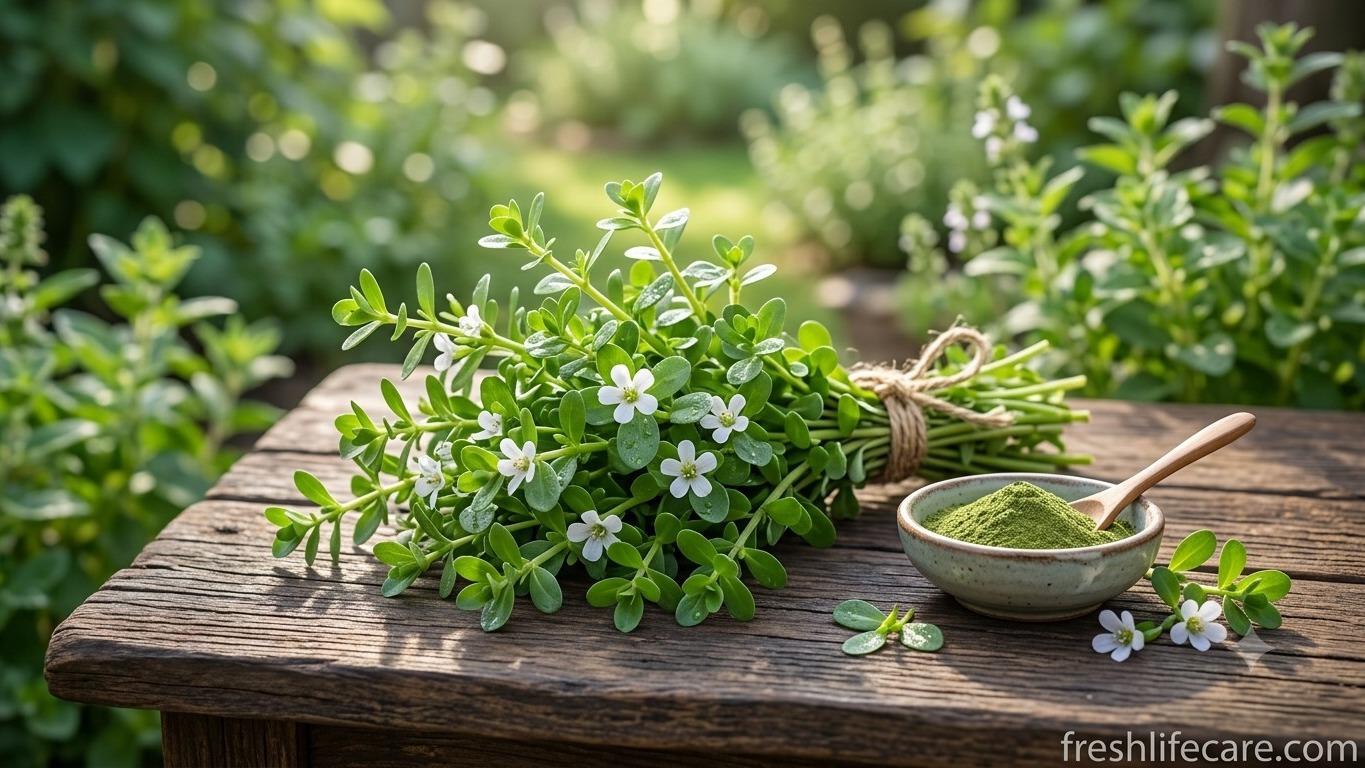
Brahmi: Where ancient Ayurvedic wisdom meets natural wellness.
Brahmi is a traditional Ayurvedic herb most commonly identified as Bacopa monnieri. It is a small, creeping, water-loving plant used traditionally to support memory, learning, mental calmness, and general nervous-system health.
Parts used
Whole aerial plant (leaves and stems): Fresh juice, dried powder, extracts, and medicated oils or ghee.
Where it grows
Brahmi naturally grows in damp, marshy places such as pond edges, wetlands, streams, riverbanks, and muddy soils. In India, it is found widely up to approximately 1,300 metres altitude and is cultivated in states including Uttar Pradesh, Punjab, Haryana, Bihar, West Bengal, Tamil Nadu, Kerala, Karnataka, Himachal Pradesh, and Uttarakhand.
It prefers warm, humid tropical or subtropical conditions and grows especially well in wet or poorly drained soils. Indian cultivation guidance notes faster growth around 30–40°C with high humidity, typically during the summer rainy season.
Traditional herbal uses
In Ayurveda, Brahmi has traditionally been used for:
Supporting memory, learning, concentration, and alertness
Promoting a calm mind and helping with stress or anxiety
Supporting sleep in some traditional preparations
Use in traditional approaches to epilepsy and other nervous-system conditions.
These are traditional uses; Brahmi should not replace medical diagnosis or treatment for epilepsy, dementia, anxiety disorders, insomnia, or depression.
Ways to use Brahmi
Powder (churna): Mixed into water, milk, or food in small amounts.
Tea or infusion: Made using dried Brahmi leaves and stems.
Tablets/capsules: Standardised extracts are available; follow the product label and avoid combining multiple supplements without advice.
Brahmi oil: Used externally on the scalp and hair in traditional practice; evidence that it improves memory or treats hair loss through scalp application is lacking.
Safety and precautions
Brahmi is not harmless simply because it is natural. The most common reported side effects include nausea, stomach cramps, diarrhoea, and increased bowel movements.
Avoid medicinal Brahmi supplements, or consult a qualified clinician first, if you:
Are pregnant or breastfeeding
Have a stomach ulcer, intestinal blockage, urinary obstruction, slow heart rate, thyroid condition, or lung disease
Take regular medicines, especially sedatives, thyroid medicines, or drugs that affect heart rate
Are considering it for a child, epilepsy, dementia, severe anxiety, or depression.
Conclusion
Brahmi (Bacopa monnieri) is a wetland Ayurvedic herb traditionally valued for mental clarity, learning, and calmness. Research shows possible modest benefits for memory and anxiety, but strong evidence is still limited. Use it as a supportive herbal product—not as a replacement for professional care—and take particular caution with supplements and medical conditions.
Related Articles

Power your body with protein—build strength, boost health, and make every day stronger!
Discover why protein is essential for muscle repair, immunity, and strength. Learn the best food sources, daily intake guidelines, and how to fuel your body naturally.
Read More
Multivitamins: Necessary or a Waste of Money?
Discover whether multivitamins are truly essential or an avoidable expense. Learn the benefits, risks, and how to choose the right path for your health.
Read More
Minerals: you can't see them, but without them, your body's whole power grid goes dark.
Discover why your body needs essential minerals like calcium, iron, and magnesium. Learn top food sources and simple tips to meet your daily intake naturally.
Read More