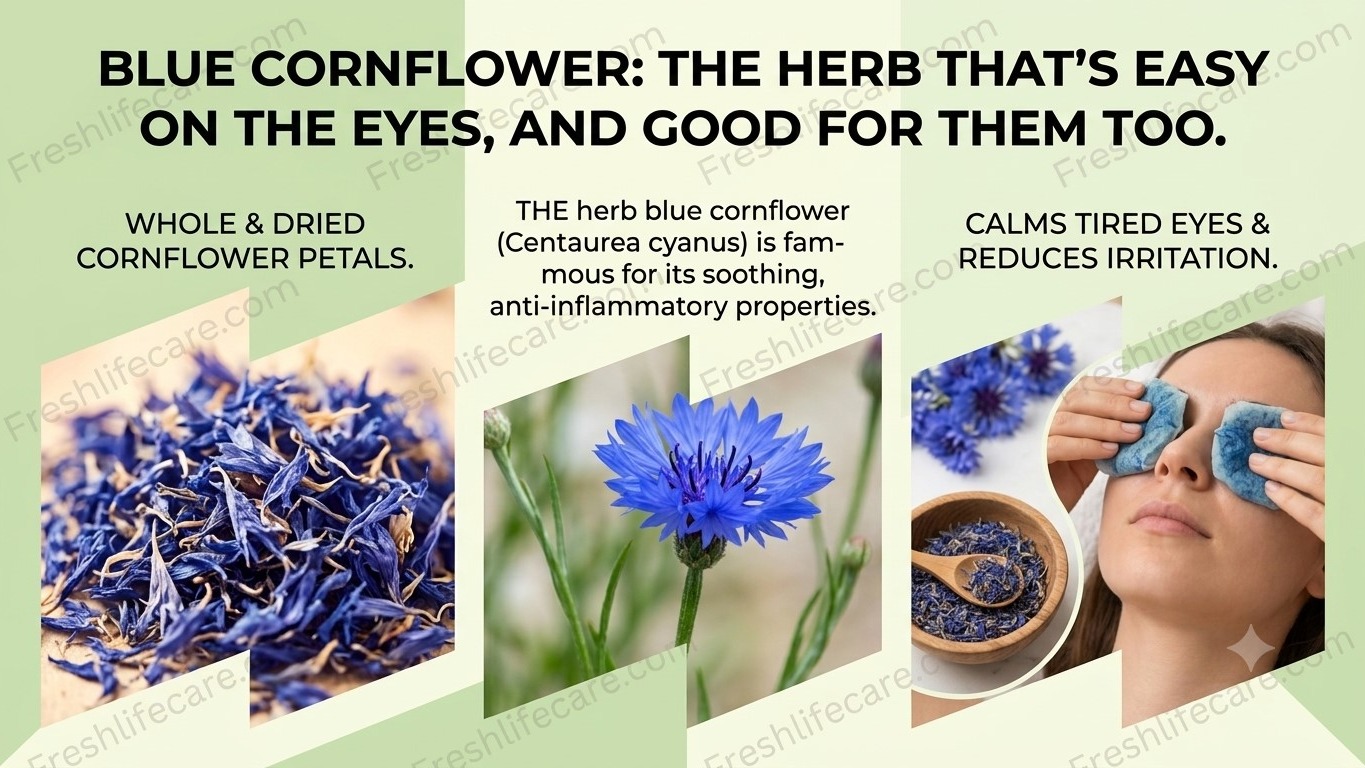
Blue cornflower: the herb that's easy on the eyes, and good for them too
Blue cornflower, also known as bachelor's button, bluebottle, or basket flower, is an annual flowering herb in the daisy family (Asteraceae). It is famous for its vivid, electric-blue flowers, a color that is rare among plants.
Origin of Blue Cornflower
Blue cornflower (Centaurea cyanus) is native to Europe, where it traditionally grew as a wildflower among cereal crops such as wheat and rye. It became especially widespread across Europe and parts of western Asia as agriculture expanded.
The plant is now naturalized in many other parts of the world, including North America and Australia. Historically, its bright blue flowers were also valued in European folk traditions and herbal practices.
There are the main uses of blue cornflower.
Health (traditional)
Cooled tea as an eye compress for tired eyes
Bitter tea to support digestion and appetite
Mild diuretic for water retention
Skin wash or toner for minor irritation
Food and drink
Edible petals on salads, cakes, desserts, and cocktails
Colorful addition to herbal tea blends
Natural blue coloring for sugar, butter, or rice
Beauty
Petal infusions in toners, face mists, and hair rinses
Cornflower water in homemade skincare
Craft and decor
Natural blue dye for ink, watercolor, and fabric (fades over time)
Fresh or dried flowers in bouquets, potpourri, and wedding decor
Garden
Attracts bees and butterflies
Works well as a border or wildflower meadow plant
Cautions
Allergy risk if you react to ragweed, chamomile, marigold, or other daisy-family plants
Avoid medicinal amounts in pregnancy and breastfeeding
Do not use homemade preparations in the eyes if there is pain, vision change, or persistent redness; see a doctor
May add to the effect of diuretics or blood pressure medicines, so check with a doctor if you take them
Use food-grade petals, not florist flowers
Conclusion: Blue cornflower is a gentle, beautiful herb with a long folk history of soothing tired eyes, supporting digestion, easing mild water retention, and calming irritated skin. Its anthocyanins and flavonoids give it real antioxidant and anti-inflammatory promise in the lab, but human studies are still scarce, so its benefits are plausible rather than proven.
Used sensibly, as a mild tea or a gentle skin toner made from food-grade petals, it is safe for most people. Those with daisy-family allergies, pregnant or breastfeeding women, and anyone on diuretics or blood pressure medicines should check with a doctor first, and eye problems that persist always need professional care.
Related Articles

Power your body with protein—build strength, boost health, and make every day stronger!
Discover why protein is essential for muscle repair, immunity, and strength. Learn the best food sources, daily intake guidelines, and how to fuel your body naturally.
Read More
Multivitamins: Necessary or a Waste of Money?
Discover whether multivitamins are truly essential or an avoidable expense. Learn the benefits, risks, and how to choose the right path for your health.
Read More
Minerals: you can't see them, but without them, your body's whole power grid goes dark.
Discover why your body needs essential minerals like calcium, iron, and magnesium. Learn top food sources and simple tips to meet your daily intake naturally.
Read More