
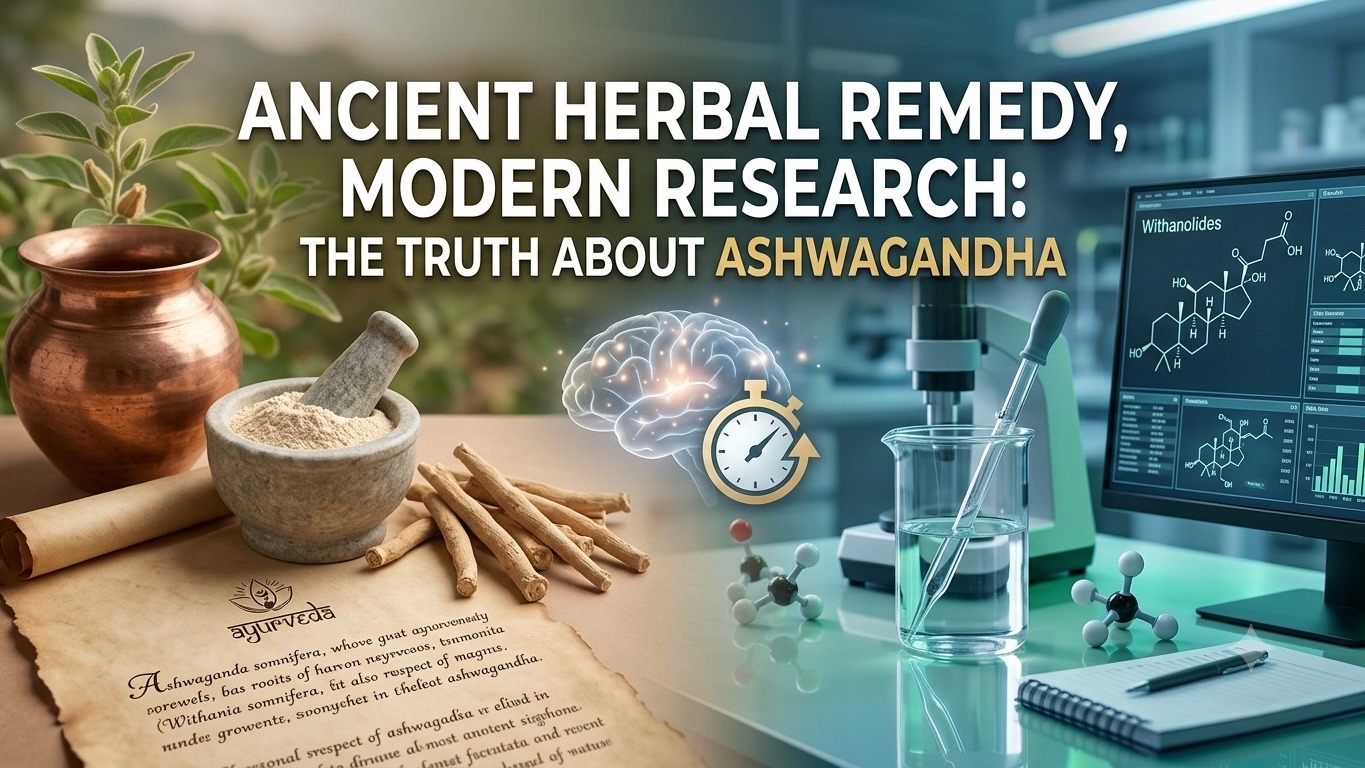
Ancient Herbal Remedy, Modern Research: The Truth About Ashwagandha
Ashwagandha (Withania somnifera) is a traditional Ayurvedic herb also known as Indian ginseng or winter cherry. Its roots and, in some preparations, leaves are used in traditional medicine. Modern research has investigated ashwagandha for stress, sleep, anxiety symptoms, physical performance and other areas, but the strength of evidence varies.
What is Ashwagandha?
Ashwagandha is a small shrub native to parts of India and other regions. Its roots contain naturally occurring compounds called withanolides, which are thought to contribute to some of its biological effects.
It is available as: Dried root, Powder, Capsules, Tablets
Benefits
Stress management
Sleep support
Anxiety symptoms
Exercise and physical performance
Cognitive function
Blood sugar and metabolic health
Antioxidant activity
Ashwagandha contains bioactive compounds with antioxidant activity demonstrated in laboratory research. For supplements, follow the product's standardized dosage and preferably discuss regular use with a healthcare professional. There have also been rare reports of liver injury associated with ashwagandha-containing supplements.
Who Should Avoid or Use Caution?
Ashwagandha may not be appropriate for everyone.
Extra caution is advised for people who:
Are pregnant or breastfeeding
Have liver disease
Have thyroid disorders
Have autoimmune conditions
Have upcoming surgery
Take medicines for diabetes or blood pressure
Take sedatives or medicines that cause drowsiness
Take thyroid medication or immunosuppressive medicines
Ashwagandha and Thyroid
This deserves particular attention. Some studies suggest ashwagandha may influence thyroid hormone levels. Therefore, people with thyroid disorders or those taking thyroid medication should not start it without medical advice.
Ashwagandha During Pregnancy
Ashwagandha supplements are generally not recommended during pregnancy because safety has not been adequately established and there are traditional and theoretical concerns about pregnancy-related effects.
Conclusion: Ashwagandha is a traditional herbal medicine with promising research in areas such as stress, sleep and certain aspects of physical performance. However, it is not a cure-all herb, and evidence varies by condition and preparation. Culinary herbs and concentrated herbal supplements are not equivalent, and long-term or high-dose use deserves particular caution.
Related Articles

Power your body with protein—build strength, boost health, and make every day stronger!
Discover why protein is essential for muscle repair, immunity, and strength. Learn the best food sources, daily intake guidelines, and how to fuel your body naturally.
Read More
Multivitamins: Necessary or a Waste of Money?
Discover whether multivitamins are truly essential or an avoidable expense. Learn the benefits, risks, and how to choose the right path for your health.
Read More
Minerals: you can't see them, but without them, your body's whole power grid goes dark.
Discover why your body needs essential minerals like calcium, iron, and magnesium. Learn top food sources and simple tips to meet your daily intake naturally.
Read More